




Follow us on Instagram
More Than an Outdoor Company.

@sawyerproducts
Follow us on Instagram



In this guide, we take a deep look at ultralight water filters and purification methods, review several products, identify the essential factors ...
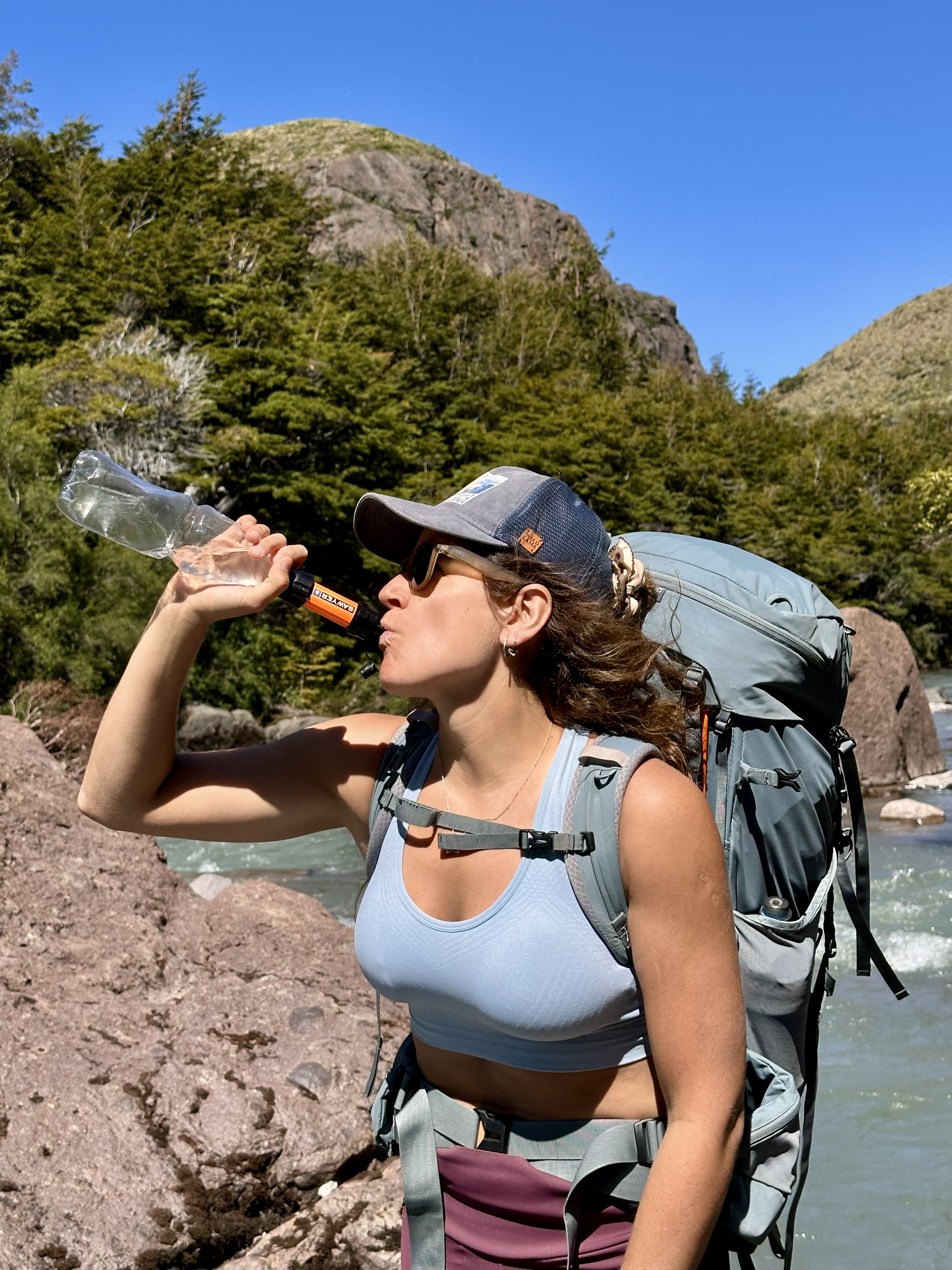
Watch videoIn this guide, we take a deep look at ultralight water filters and purification methods, review several products, identify the essential factors to consider when planning your hydration and water treatment system for bikepacking, and reveal our editors’ choices.
Sourcing and carrying water can be one of the trickiest parts of planning your bikepacking kit (and often the trip itself). Whether it’s an overnighter or a month-long international dirt-road tour, bikepackers almost always require a lot of water. Supplemental hydration is a necessary requirement when you’re exerting the high level of energy required to pedal a loaded bicycle. And water is heavy, takes up valuable real estate on the bike, and can often be hard to find. This guide aims to help simplify the process of staying hydrated while out on the bike.
We have routes on this site where water is plentiful, such as the Appalachian Gravel Growler, which is chock full of clear springs and mountain streams. When bikepacking in this type of environment, there’s no significant reason to carry more than a liter bottle and a reliable filter. On the flip side, routes such as the Camino del Diablo in southern Arizona require a disproportionate volume of water to be carried over several days. Then, there are routes through developing nations with tap water provided by questionable infrastructure, where drinking water can be risky business.
Some water flows from piped, crystal-clear springs that can be consumed as is. Other seemingly benign water sources are swimming with malevolent microorganisms. Furthermore, many water sources may be murky with deposits of white glacial silt, green algae, or sandy brown soil. While bikepacking, you may face one or more of these scenarios, and the reality is there’s no ideal, singular product or method for treating and purifying all drinking water. Every situation is different.
Read the full article by Logan Watts on Bikepacking.com's website here.


In this guide, we take a deep look at ultralight water filters and purification methods, review several products, identify the essential factors to consider when planning your hydration and water treatment system for bikepacking, and reveal our editors’ choices.
Sourcing and carrying water can be one of the trickiest parts of planning your bikepacking kit (and often the trip itself). Whether it’s an overnighter or a month-long international dirt-road tour, bikepackers almost always require a lot of water. Supplemental hydration is a necessary requirement when you’re exerting the high level of energy required to pedal a loaded bicycle. And water is heavy, takes up valuable real estate on the bike, and can often be hard to find. This guide aims to help simplify the process of staying hydrated while out on the bike.
We have routes on this site where water is plentiful, such as the Appalachian Gravel Growler, which is chock full of clear springs and mountain streams. When bikepacking in this type of environment, there’s no significant reason to carry more than a liter bottle and a reliable filter. On the flip side, routes such as the Camino del Diablo in southern Arizona require a disproportionate volume of water to be carried over several days. Then, there are routes through developing nations with tap water provided by questionable infrastructure, where drinking water can be risky business.
Some water flows from piped, crystal-clear springs that can be consumed as is. Other seemingly benign water sources are swimming with malevolent microorganisms. Furthermore, many water sources may be murky with deposits of white glacial silt, green algae, or sandy brown soil. While bikepacking, you may face one or more of these scenarios, and the reality is there’s no ideal, singular product or method for treating and purifying all drinking water. Every situation is different.
Read the full article by Logan Watts on Bikepacking.com's website here.
In this guide, we take a deep look at ultralight water filters and purification methods, review several products, identify the essential factors to consider when planning your hydration and water treatment system for bikepacking, and reveal our editors’ choices.
Sourcing and carrying water can be one of the trickiest parts of planning your bikepacking kit (and often the trip itself). Whether it’s an overnighter or a month-long international dirt-road tour, bikepackers almost always require a lot of water. Supplemental hydration is a necessary requirement when you’re exerting the high level of energy required to pedal a loaded bicycle. And water is heavy, takes up valuable real estate on the bike, and can often be hard to find. This guide aims to help simplify the process of staying hydrated while out on the bike.
We have routes on this site where water is plentiful, such as the Appalachian Gravel Growler, which is chock full of clear springs and mountain streams. When bikepacking in this type of environment, there’s no significant reason to carry more than a liter bottle and a reliable filter. On the flip side, routes such as the Camino del Diablo in southern Arizona require a disproportionate volume of water to be carried over several days. Then, there are routes through developing nations with tap water provided by questionable infrastructure, where drinking water can be risky business.
Some water flows from piped, crystal-clear springs that can be consumed as is. Other seemingly benign water sources are swimming with malevolent microorganisms. Furthermore, many water sources may be murky with deposits of white glacial silt, green algae, or sandy brown soil. While bikepacking, you may face one or more of these scenarios, and the reality is there’s no ideal, singular product or method for treating and purifying all drinking water. Every situation is different.
Read the full article by Logan Watts on Bikepacking.com's website here.
More Than an Outdoor Company.

