







Follow us on Instagram
More Than an Outdoor Company.

@sawyerproducts
Follow us on Instagram



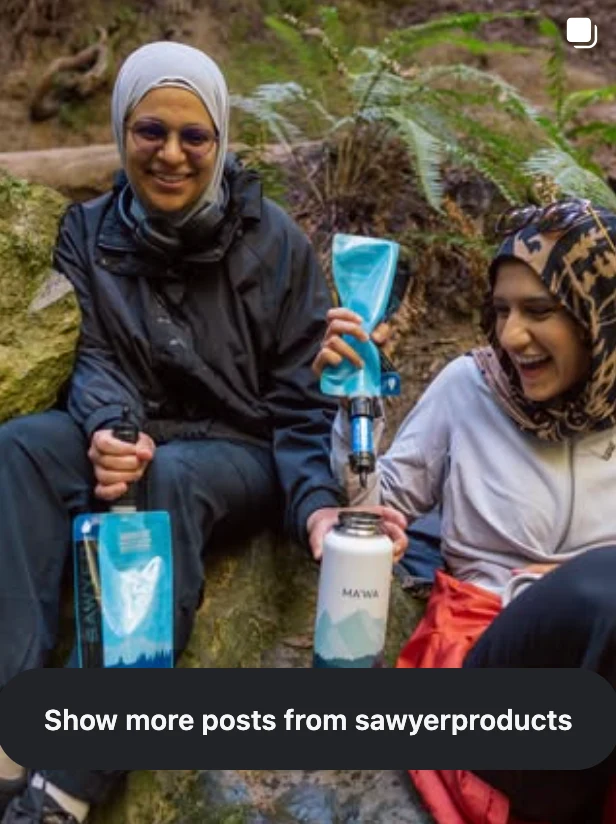

The perfect ultralight pack is almost never truly attainable and the constant quest for it turns into a science of ounce-shaving by leaving at home...
Watch videoNot all hikes of the Pacific Crest Trail (or any long-distance thru-hike) begin this way, but somewhere along the route, nearly every hiker turns into a “weight weenie.”
The affectionate moniker goes to anyone with a near-obsessive desire to cut weight from their pack. At first glance, that makes a lot of sense: The more miles you’re traveling with a backpack on, the more important it is to get that backpack as light as possible.
But for outsiders, it borders on crazy. The perfect ultralight pack is almost never truly attainable and the constant quest for it turns into a science of ounce-shaving by leaving at home everything that’s not absolutely necessary, finding the lightest possible gear, and even physically trimming the gear they have when possible. True weight weenies are using tarps instead of tents, not bothering to bring a hat because their jacket has a hood, even cutting their toothbrush in half to save on weight. “EVERY OUNCE COUNTS” IS THE UNOFFICIAL SLOGAN OF THE WEIGHT WEENIES MOVEMENT.
Even if it makes complete sense when you’re hiking thousands of miles at a time, most of us won’t be giving up creature comforts like tent floors, camp chairs, or durability in favor of reducing our packs' base weight (the most important metric to thru-hikers is the weight of their pack and gear, before adding food and water). Having slightly sore shoulders simply isn’t that bad when you’re only out for a weekend. But even us lay people can use the weight weenie ethos to be a little more comfortable on the trail.
It’s easy to pick out bits of their mentality and pieces of their gear to cut our own base weight just a little bit, making it easier to go further (or, if you’re like me, just carry more food instead). Personally, I’ve borrowed some of the tenets of weight weenie-ism to help me realize what I just don’t need to carry, or how I can cut things out for slightly longer trips.
Continue learning some packing tips for your next adventure here.


Not all hikes of the Pacific Crest Trail (or any long-distance thru-hike) begin this way, but somewhere along the route, nearly every hiker turns into a “weight weenie.”
The affectionate moniker goes to anyone with a near-obsessive desire to cut weight from their pack. At first glance, that makes a lot of sense: The more miles you’re traveling with a backpack on, the more important it is to get that backpack as light as possible.
But for outsiders, it borders on crazy. The perfect ultralight pack is almost never truly attainable and the constant quest for it turns into a science of ounce-shaving by leaving at home everything that’s not absolutely necessary, finding the lightest possible gear, and even physically trimming the gear they have when possible. True weight weenies are using tarps instead of tents, not bothering to bring a hat because their jacket has a hood, even cutting their toothbrush in half to save on weight. “EVERY OUNCE COUNTS” IS THE UNOFFICIAL SLOGAN OF THE WEIGHT WEENIES MOVEMENT.
Even if it makes complete sense when you’re hiking thousands of miles at a time, most of us won’t be giving up creature comforts like tent floors, camp chairs, or durability in favor of reducing our packs' base weight (the most important metric to thru-hikers is the weight of their pack and gear, before adding food and water). Having slightly sore shoulders simply isn’t that bad when you’re only out for a weekend. But even us lay people can use the weight weenie ethos to be a little more comfortable on the trail.
It’s easy to pick out bits of their mentality and pieces of their gear to cut our own base weight just a little bit, making it easier to go further (or, if you’re like me, just carry more food instead). Personally, I’ve borrowed some of the tenets of weight weenie-ism to help me realize what I just don’t need to carry, or how I can cut things out for slightly longer trips.
Continue learning some packing tips for your next adventure here.
Not all hikes of the Pacific Crest Trail (or any long-distance thru-hike) begin this way, but somewhere along the route, nearly every hiker turns into a “weight weenie.”
The affectionate moniker goes to anyone with a near-obsessive desire to cut weight from their pack. At first glance, that makes a lot of sense: The more miles you’re traveling with a backpack on, the more important it is to get that backpack as light as possible.
But for outsiders, it borders on crazy. The perfect ultralight pack is almost never truly attainable and the constant quest for it turns into a science of ounce-shaving by leaving at home everything that’s not absolutely necessary, finding the lightest possible gear, and even physically trimming the gear they have when possible. True weight weenies are using tarps instead of tents, not bothering to bring a hat because their jacket has a hood, even cutting their toothbrush in half to save on weight. “EVERY OUNCE COUNTS” IS THE UNOFFICIAL SLOGAN OF THE WEIGHT WEENIES MOVEMENT.
Even if it makes complete sense when you’re hiking thousands of miles at a time, most of us won’t be giving up creature comforts like tent floors, camp chairs, or durability in favor of reducing our packs' base weight (the most important metric to thru-hikers is the weight of their pack and gear, before adding food and water). Having slightly sore shoulders simply isn’t that bad when you’re only out for a weekend. But even us lay people can use the weight weenie ethos to be a little more comfortable on the trail.
It’s easy to pick out bits of their mentality and pieces of their gear to cut our own base weight just a little bit, making it easier to go further (or, if you’re like me, just carry more food instead). Personally, I’ve borrowed some of the tenets of weight weenie-ism to help me realize what I just don’t need to carry, or how I can cut things out for slightly longer trips.
Continue learning some packing tips for your next adventure here.
More Than an Outdoor Company.

